
Staff Mobility · Job Shadowing

    Job Shadowing & Erasmus+ Staff Mobility for Educators

    Give your students and staff the chance to observe professionals in action — a structured, low-barrier introduction to international mobility funded under Erasmus+.

    • Vetted hosts in 32 cities
    • ESCO-mapped objectives
    • Europass + closure pack
    • 24/7 on-call coordinator

    Tell us your dates, sectors and group size — 5-minute form, written reply within 48 working hours.

    Piktalent is the Erasmus+ mobility brand of The Student Mobility Group, operating since 2009 — short observation flows for VET schools, universities and staff across 32 European cities (see the full list of destination countries).

    Mhairi, Job Shadowing Programme Lead at Piktalent.

    Mhairi

    Job Shadowing Programme Lead

    "From scoping observation objectives to Europass closure, we run shadowing flows that hold up in any National Agency audit."

    300+

    Shadowing flows delivered

    32

    European cities

    24/7

    On-call coordinator

    What Is a Job Shadowing Program?

    A job shadowing programme is a short-term mobility activity where participants observe and follow professionals in a real workplace setting abroad. Unlike internships or traineeships, job shadowing does not involve hands-on work — participants learn through structured observation, Q&A sessions, and guided workplace exposure. These programmes are funded under Erasmus+ KA1 (defined in the official Erasmus+ Programme Guide) and recognised through Europass Mobility. Observation objectives are mapped against ESCO occupation codes so the activity remains audit-ready in the Beneficiary Module. Piktalent coordinates flows in flagship Erasmus+ destinations such as Valencia, Lisbon, Dublin and Berlin, with the full list available across our 32 European destinations. Job shadowing is the right format for first-time mobility, career exploration, staff professional development, and de-risking host-company relationships before committing to longer placements.

    Indicative Erasmus+ unit costs for staff job shadowing (Call 2025):
    • Individual support: €106–€180/day depending on receiving country group (days 1–14), reduced rate from day 15.
    • Travel: €28 (10–99 km) up to €1,735 (≥8,000 km) per participant, with green-travel top-up of €50 + up to 4 extra travel days.
    • Organisational support: €350 per participant (decreasing tiers above 100 participants in a project).
    • Inclusion top-ups available for participants with fewer opportunities (real-cost basis).

    Last updated · Reviewed by Piktalent Operations, Mobility Operations Lead

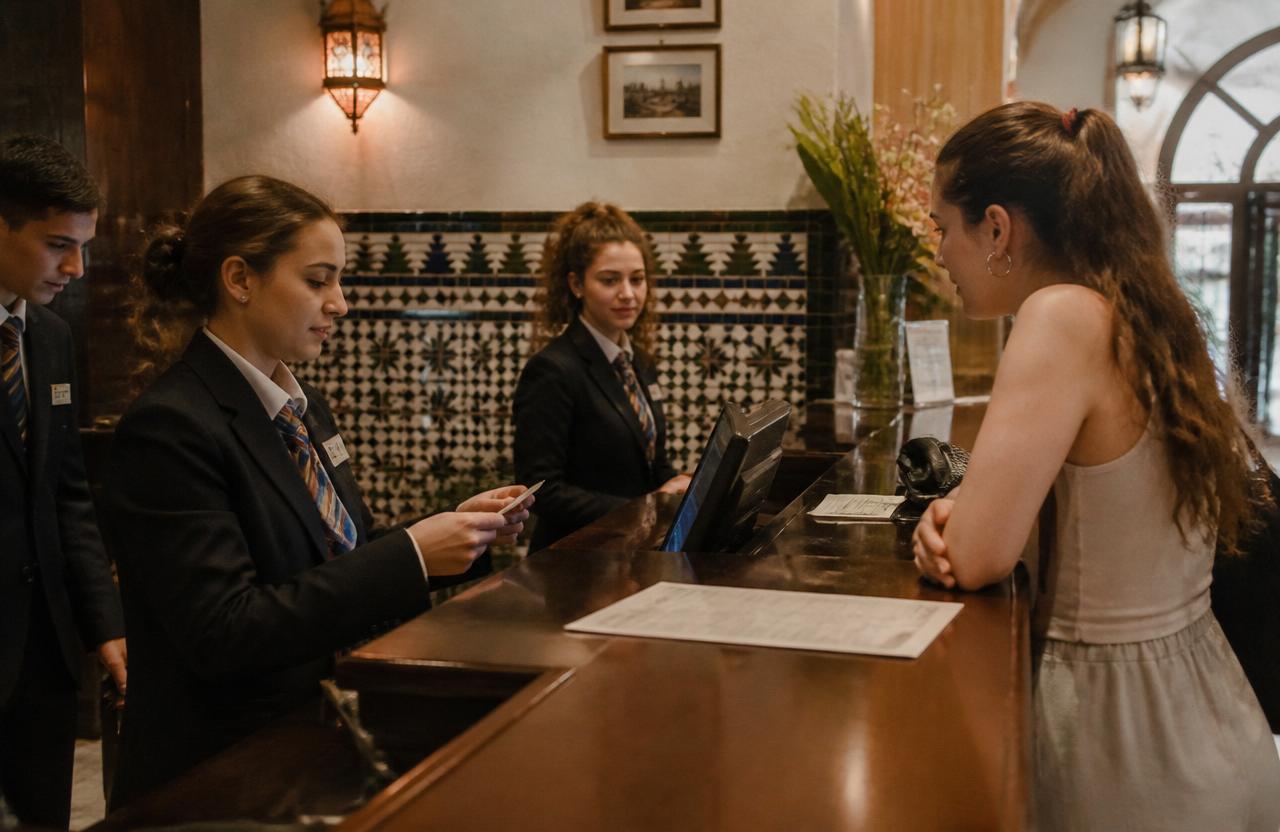
    Erasmus+ job-shadowing participant taking notes while observing a senior colleague in a modern European office.

    Typical Program Structure

    Typical configuration for a Piktalent-managed Erasmus+ job-shadowing flow.

    Duration

    3 to 10 days on-site, with a structured pre-departure briefing and post-mobility reflection.

    Format

    Individual or small group (2–12 participants), each shadowing 1–3 hosts per flow with daily debriefs.

    Audience

    VET students, HEI students, teachers, trainers, international-office staff and curriculum designers.

    Workload

    3–4 observation slots per day + one structured Q&A + reflection prompt — designed against the Erasmus Quality Standards.

    Recognition

    Europass Mobility, signed observation agreement, host evaluation. ECTS recognition possible for HEI staff on case-by-case basis.

    Funding

    Eligible under Erasmus+ KA121 and KA122 staff-mobility and learner-mobility actions.

    Skills Participants Build Abroad

    What participants and institutions take away from a structured Piktalent-managed shadowing flow — beyond a generic 'cultural exposure' line.

    • Documented observation evidence mapped to ESCO codes — usable in Europass Mobility and curriculum-update worksheets
    • Curriculum updates for VET teachers grounded in real European workplace practices, not desk research
    • International-office staff: comparative IT, OLA-T and Beneficiary Module workflows from peer HEIs, with concrete process changes back at home
    • Students: career-decision evidence (preferred sector, role and host country) before committing to a longer internship
    • Sending institution: a vetted host shortlist for future internship pipelines (≈30–40% of shadowing hosts become internship hosts within 12 months)
    • Cross-cultural professional communication observed in context (meetings, handovers, customer interaction) rather than role-played

    Who This Program Is For

    VET Schools

    Vocational institutions looking for short-term, low-barrier mobility options for students.

    Universities

    Higher education institutions organising observation-based mobility for students or staff.

    Staff & Teachers

    Educators seeking professional development through workplace observation in another country.

    What's Included

    Every programme includes comprehensive services managed end-to-end by Piktalent.

    Structured observation schedule

    1–3 named hosts per participant with 3–4 observation slots per day, a daily Q&A block and a written reflection prompt — designed against the Erasmus Quality Standards rather than ad-hoc visits.

    Observation agreement

    ESCO-mapped observation objectives co-signed by host and sending institution before departure, with host evaluation and Europass Mobility certificate at closure.

    Accommodation

    Vetted student residences, shared apartments or hotels (for staff flows) within 30–45 min commute of the host. Single rooms available on request.

    Insurance

    Travel + medical + civil liability cover that meets Erasmus+ KA1 minimums (€30,000 medical, repatriation). Certificates issued before flight.

    Cultural & networking programme

    Optional curated evening and weekend programme: peer networking, sector meetups, city orientation. Scaled to staff vs. student audience.

    Local coordinator + 24/7 line

    One named coordinator per city, on-call 24/7 emergency line, daily check-ins for short flows. Audit-ready coordinator log included in your final report.

    How It Works

    01

    Scoping (week 0–2)

    Kickoff call: observation objectives, ESCO mapping, sectors, group profile, dates and destinations. Output: scoping doc, indicative pricing, draft observation agreement.

    02

    Host selection (week 2–5)

    Sourcing and confirmation of 1–3 hosts per participant, validated against observation objectives. Named host contacts and observation slots locked.

    03

    Programme design (week 5–7)

    Daily schedule with observation slots, structured Q&A blocks, reflection prompts, optional cultural programme. Pre-departure briefing pack delivered to participants.

    04

    Execution & closure

    On-site coordination, daily check-ins, host evaluations collected, Europass certificates issued, and final coordinator log delivered for the Beneficiary Module.

    How this programme runs in practice

    Three concrete institutional or participant situations and the operational path Piktalent runs for each.

    Vocational school teacher exchange — 8 staff observing host workplaces

    A KA121-accredited VET school sends 8 teachers (hospitality, IT and electronics) on a 1-week observation flow to update their curriculum content. Each teacher shadows a different host (kitchen line, SaaS engineering team, electronics lab) with a daily debrief and a structured curriculum-update worksheet. A joint reflection session on day 5 captures cross-sector insights.

    Outcome

    Curriculum updates ship within 3 months of return. Two host companies join the school's KA121 host network for student placements next year.


    First-time mobility for a small VET centre

    A 35-learner VET centre with no prior Erasmus+ activity wants to test mobility before committing to a full KA121 application. A 5-day job-shadowing flow with 12 students in Spain. Activities: 2 hosts per student, daily group reflection, and a final structured presentation back at school.

    Outcome

    Application for KA122 follows within 6 months. The school cites the job-shadowing flow as evidence of operational readiness.

    University international office staff training in another HEI

    Six staff from a French university shadow international-office colleagues at three German and Polish HEIs for 4 days each. Piktalent coordinates the host HEIs, schedule of mobility-office observation, IT and Beneficiary-Module walkthroughs, plus an evening debrief between visits.

    Outcome

    The French university redesigns its OLA-T workflow, cuts average signature time from 12 to 4 days, and presents the lessons at its NA's national mobility forum.

    Is this the right programme for you?

    Job shadowing is the right choice for short, observation-based mobility — typically as a low-barrier first step or as targeted staff development. For supervised work placements or longer mobility, a different programme fits better.

    Choose this programme when…

    • You want a 3–10 day mobility for staff or students, not a multi-week placement.
    • Your participants will observe — not perform — work in the host organisation.
    • Your institution is new to Erasmus+ and wants a low-risk first activity.
    • Staff want professional development through cross-organisation observation.
    • You are testing future host companies before committing to longer placements.

    Consider another programme when…

    What Participants Observe — by Sector

    Concrete examples of what a participant typically observes during a 5-day flow, by sector. Used to scope ESCO-mapped observation objectives before host sourcing.

    Hospitality

    Front-desk shift handover, F&B service flow, housekeeping briefing, weekly revenue meeting, OTA-rate update process.

    IT / SaaS

    Sprint planning and stand-ups, code-review session, customer-success ticket triage, release deployment, on-call escalation walkthrough.

    Healthcare

    Ward handover, multidisciplinary case conference, patient-admission flow, outpatient clinic shadowing, infection-control rounds (non-clinical observation only).

    Renewable Energy

    Site survey for a solar/wind installation, O&M control-room walkthrough, supplier QA meeting, grid-connection paperwork review.

    Education

    Lesson observation across two key stages, department planning meeting, SEN/inclusion coordinator session, parent–teacher consultation, CPD workshop.

    Logistics & Supply Chain

    Inbound goods receipt, warehouse picking-route walk, transport-planning huddle, customs documentation review, KPI weekly review.

    Recognition & Paperwork — by Audience

    Recognition pathway and the specific paperwork your coordinator will produce, broken down by participant profile.

    AudienceRecognitionPaperwork
    VET learnersEuropass Mobility + ECVET units where applicableLearning Agreement for Traineeship (LA-T, observation variant), host evaluation, certificate of attendance, ESCO-mapped observation log.
    HEI studentsEuropass Mobility + optional ECTS (case-by-case via the home institution)Learning Agreement for Traineeship (observation variant in OLA), Transcript of Work, Europass.
    Teachers, trainers & VET staffEuropass Mobility for StaffMobility Agreement for Staff Training, signed schedule, host evaluation, curriculum-update worksheet.
    International office / HEI admin staffEuropass Mobility for Staff + internal CPD recordMobility Agreement for Staff Training, structured observation report, OLA-T / Beneficiary Module workflow notes.

    Job Shadowing vs Internship vs Staff Training Mobility

    How the three short-mobility formats differ in practice — duration, funding action, recognition and best-fit audience.

    • Job Shadowing

      Format
      Structured observation of professionals at work
      Typical duration
      3–10 days
      Funding action
      KA121 / KA122 (learner or staff)
      Recognition
      Europass Mobility (+ optional ECTS for HEI staff)
      Best for
      First-time mobility, career exploration, host scouting
    • Internship / Traineeship

      Format
      Hands-on supervised work tasks at a host company
      Typical duration
      2 weeks – 12 months
      Funding action
      KA121 / KA122 / KA131 (learner) or VET
      Recognition
      Europass + ECVET / ECTS depending on level
      Best for
      Building hands-on competences and CV experience
    • Staff Training Mobility

      Format
      Course, workshop or training delivered to staff abroad
      Typical duration
      2–10 days
      Funding action
      KA121 / KA122 / KA171 (staff)
      Recognition
      Europass Mobility for Staff + Mobility Agreement closure
      Best for
      Staff professional development and curriculum update

    Source: Erasmus+ Programme Guide 2025, EU Commission. Format definitions confirmed against Europass and ESCO frameworks.

    Indicative Pricing per Participant

    Typical all-in cost for a 5-day Piktalent-managed job-shadowing flow, excluding the Erasmus+ travel and OS grant. Final quotes depend on city, sectors and group size.

    Group flow (8–12 pax)

    €620 – €860

    Host sourcing (1–3 hosts/pax), schedule, accommodation in shared apartments, insurance, local coordinator, Europass closure pack.

    Small group (3–7 pax)

    €780 – €1,050

    Higher-touch coordination, 2–3 hosts per participant, single rooms on request, daily coordinator check-ins.

    Staff flow (1–4 pax)

    €950 – €1,400

    Sector-matched hosts, hotel or aparthotel, evening peer-networking option, Europass for Staff.

    What drives the variance

    • Destination city (Tier 1 capitals vs secondary cities)
    • Number of hosts per participant (1 vs 3)
    • Accommodation profile (shared, studio, hotel)
    • Add-ons: cultural programme, language sessions, airport pickup
    • Group size (per-pax cost decreases above 8 participants)
    • Sectors with restricted host pools (healthcare, regulated industries)

    Indicative ranges for budgeting only — they are not a quote. Eligible Erasmus+ unit costs (individual support, travel, OS) are typically refunded by the National Agency in addition to the figures above.

    Planning a shadowing flow this term?

    Share audience, sector and target dates — we return a per-participant quote and host shortlist within 48 hours.

    Request a 48h quote

    Quality Standards Self-Audit (10-point check)

    Your job-shadowing flow is aligned with the Erasmus Quality Standards if you can answer ‘yes’ to all ten. Coordinators use this list during NA monitoring visits.

    • Each participant has 4–6 observation objectives mapped to ESCO codes before departure.
    • A signed Learning Agreement / Mobility Agreement (observation variant) exists for every participant.
    • Each participant shadows at least two hosts during the flow to enable comparative learning.
    • Daily schedule includes 3–4 observation slots, one structured Q&A and one reflection prompt.
    • Accommodation is within 30–45 minutes of the host site by public transport.
    • Insurance covers medical (≥€30,000), repatriation and civil liability for the full flow dates.
    • A named local coordinator and a 24/7 emergency line are documented and shared with participants.
    • Host evaluations and participant reflections are collected before departure from the host city.
    • Europass Mobility certificates are issued within 30 days of return.
    • An audit-ready coordinator log is delivered for the Beneficiary Module before the next reporting window.

    Common Pitfalls — and How to Avoid Them

    The most common operator mistakes we see when institutions run job-shadowing flows in-house — and how to avoid them.

    Treating shadowing as study tourism — no ESCO mapping, no learning outcomes.

    Lock 4–6 ESCO-mapped observation objectives in the LA-T before sourcing any host.

    Single host for the full flow — no comparative learning.

    Schedule at least two hosts per participant so comparison and reflection are possible.

    No daily reflection — fails the NA monitoring visit on quality criteria.

    Build a 15–20 min daily debrief and a written reflection prompt into the schedule.

    Accommodation booked >45 min from the host — eats half a day per participant.

    Vet accommodation by commute time, not just price; aim for ≤30 min door-to-door.

    Europass and host evaluation collected late — closure pack drifts past the reporting window.

    Issue Europass in-flow on the last day and collect host evaluation before departure.

    From the Coordinators We Work With

    Anonymised feedback from coordinators who ran job-shadowing flows with Piktalent in the last 18 months.

    "We used the shadowing flow as our first Erasmus+ activity. Six months later we submitted a KA122 application — and we cited the flow as evidence of operational readiness. The closure pack made the application almost trivial."
    International Office Head — VET centre, Northern Italy
    "The ESCO-mapped observation log was the difference between ‘nice trip’ and ‘defensible CPD.’ Our NA monitoring visit went through without a single quality flag."
    International Mobility Coordinator — HEI, France

    A Day in the Life of a Shadowing Participant

    An indicative day on a Piktalent-managed flow — designed against the Erasmus Quality Standards rather than ad-hoc workplace visits.

    1. 08:30

      Arrival and welcome at host site

      Health & safety briefing, introduction to the team and the day's observation objectives.

    2. 09:00

      Observation slot 1 — operational handover

      Shadow the morning handover or stand-up to capture team rhythm and language.

    3. 10:30

      Observation slot 2 — process or department deep-dive

      Move with a named host through a single end-to-end process (e.g. customer ticket, patient admission, kitchen line).

    4. 12:30

      Lunch with the host team

      Informal cultural exposure — peer language practice and unstructured Q&A.

    5. 14:00

      Observation slot 3 — cross-team meeting or client interaction

      Observe a meeting, customer call or service interaction relevant to the participant's ESCO objectives.

    6. 15:30

      Structured Q&A with the host

      30 min focused Q&A against the observation objectives logged in the LA-T.

    7. 16:30

      Reflection and log entry

      Written reflection prompt + ESCO-mapped observation log, reviewed by the local Piktalent coordinator.

    8. 18:00

      Optional cultural / networking activity

      Peer meetup, sector mixer or guided city orientation — scaled to staff vs. student audience.

    Why Institutions Choose Piktalent

    300+
    Job-shadowing flows delivered
    3–10 days
    Typical on-site duration
    30–40%
    Hosts → future internship pipeline
    6–8 wks
    Briefing → confirmed schedule
    Participants gain first-hand insight into international work environments
    Low-barrier entry point for institutions new to Erasmus+ mobility
    Staff develop professional competences through cross-cultural observation
    Students explore career paths before committing to longer placements
    Institutions build relationships with European companies for future mobilities
    Short duration (3–10 days) makes it easy to fit into academic calendars
    Positive experiences encourage institutions to expand to longer mobility formats

    Frequently Asked Questions

    For Universities, VET Centres & Coordinators

    Design your next job-shadowing flow

    Tell us about the participants, sectors and target dates. We come back within 48 hours with a host plan, observation schedule and indicative pricing.

    Plan a Job Shadowing Programme