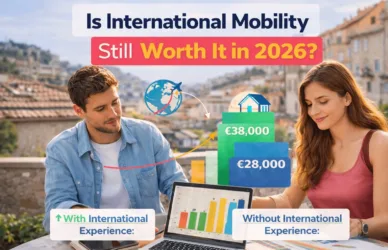
Mobility vs Staying Local: A Data Comparison
The debate between international mobility and staying local for work opportunities is not a new one. However, with the changing landscape of work, the rise of digital transformations, and the evolving global job market, it’s time to look at the facts. Is going abroad for an internship, education, or job still worth it? Let’s dive into the data and see how mobility compares to staying in your local job market when it comes to:
- Salary growth
- Network expansion
- Promotion speed
- Skill acquisition
This thought-leadership piece is aimed at helping students, universities, and professionals understand which path can accelerate career growth. The right choice may depend on your long-term career goals, and the data will help you make that decision.
1️⃣ Salary Growth: Does Mobility Really Pay Off?
In 2026, salary growth is one of the most important factors in evaluating a career path. According to a recent OECD report on youth employment, international mobility is still a proven factor in boosting earnings, especially in the first 5 years after graduation.
Let’s break it down:
| Career Path | Average Salary Increase with International Mobility | Average Salary Increase Staying Local |
|---|---|---|
| Post-internship (1st job) | +€10,000 (25%) | +€5,000 (12%) |
| 5 years later (career progression) | +€15,000 (35%) | +€8,000 (18%) |
Data from World Economic Forum shows that professionals who have international experience are more likely to negotiate higher salaries and move faster through corporate salary bands. International internships or study abroad programs contribute significantly to early career salary increments, and those benefits compound over time.
2️⃣ Network Expansion: Building Bridges, Not Walls
Your network is your net worth. But let’s be real — in a local market, you’re pretty much only connecting with people from your community, sector, and region. Mobility, however, allows you to build an international network that can help you tap into diverse career opportunities worldwide.
According to Eurostat and a study on Cedefop’s European Skills Forecast, professionals who worked internationally had 70% more access to cross-border job opportunities and had a 50% higher chance of being referred by international contacts than those who remained local.
So, what does this mean?
- International mobility allows you to build a globally connected network.
- Networking in diverse markets accelerates access to high-impact job opportunities.
- Staying local limits your exposure to international recruiters and international career paths.
In 2026, your professional network needs to be international. And mobility is the fastest way to make that happen.
3️⃣ Promotion Speed: The Race to the Top
Speed matters in the modern job market. According to a 2023 study from Cedefop, individuals who gain international experience are promoted at a rate of 1.5 times higher than those who remain in the local job market. The skills gained from internships abroad, such as intercultural communication, adaptability, and problem-solving, are highly valued in the fast-paced global market.
So, let’s compare promotion speed:
| Factor | Promotion Speed with Mobility | Promotion Speed Staying Local |
|---|---|---|
| Time to Managerial Role | 3-5 years | 5-7 years |
| Time to Senior Executive | 7-10 years | 10-15 years |
The takeaway: getting international experience can fast-track promotions in your industry. The earlier you take on international challenges, the quicker you’ll be sitting in that corner office.
4️⃣ Skill Acquisition: Developing the ‘X-Factor’
Employers aren’t just looking for technical skills anymore — they want adaptability, resilience, cross-cultural communication, and a global mindset. According to World Economic Forum’s Future of Jobs Report 2023, professionals with international mobility experience develop the “X-factor” — that elusive combination of skills that makes you stand out in any market.
Skills Developed through International Mobility:
- Global business etiquette
- Fluency in multiple languages
- Enhanced problem-solving abilities
- Networking and relationship-building across cultures
- Leadership in multicultural teams
Studies show that 85% of employers in Europe value international experience for these soft skills. The remaining 15%? They’re probably still figuring out how Zoom works.
So, Is Mobility Still Worth It in 2026?
The data is clear: international mobility accelerates career growth, salaries, and skills acquisition in ways that staying local simply can’t match. With the global job market becoming more interconnected, the ability to work across borders is a career-defining advantage.
Ultimately, the decision to go abroad or stay local depends on your goals. But in 2026, international mobility offers a much quicker path to:
- Higher salaries
- Faster career progression
- A broader, international network
- Critical soft skills that employers crave
If you’re ready to make your next big career move, we recommend getting in touch with Piktalent. We can connect you to top-tier internship opportunities across Europe — helping you build a career that spans borders and industries.